
“He, for the joy [of obtaining the prize] that was set before Him, endured the cross, despising and ignoring the shame, and is now seated at the right hand of the throne of God..”
— Hebrews 12:2 (AMPC)
The cross didn’t look like victory.
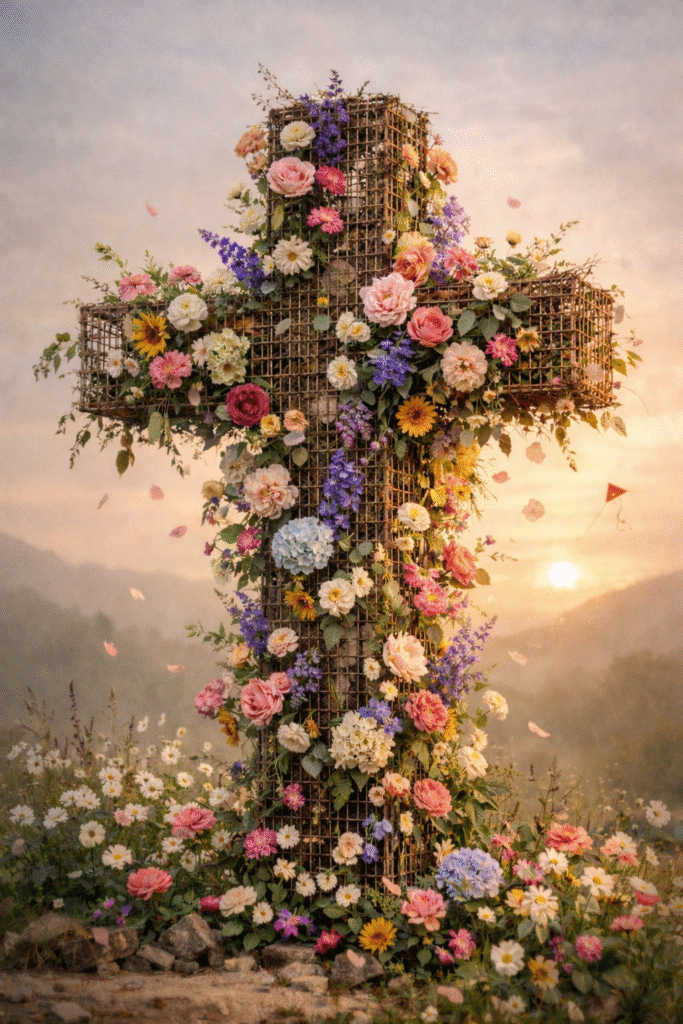
“Collateral beauty.”
Wait—don’t you mean collateral damage?
As part of our church’s study of 1 Peter, our friend Karen wrote on our collective Bible study blog:
“My prayer is that our church would not be surprised by suffering and would not move away from God in distrust because of suffering, but would rather embrace it as a conduit to His collateral beauty that only suffering can accomplish.”
We don’t naturally associate suffering with beauty. And yet, her words rang true. In our own lives, suffering has shaped and gifted us in ways we never could have imagined. We’ve all heard people who emerge from seasons of hardship say, “I wouldn’t change it for the world.”
That’s collateral beauty—the realization that removing the “bad” parts of our history would also erase the “good” parts of our present.
Joni Eareckson Tada offers a powerful example. Paralyzed from the neck down as a teenager, she endured years of what she described as a “dark night of the soul.” Yet she eventually came to a startling conclusion: her suffering was the very thing that made her life beautiful. Today, she is a celebrated author and advocate who views her wheelchair not as a prison, but as a platform.
Collateral beauty also comes to mind when I think of one of our favorite Easter traditions from our years in Charlotte—the flowering of the cross on Resurrection Sunday. Each person brought a fresh-cut flower from home, and during the opening procession, the flowers were placed into a wire mesh cross. Slowly, an ugly instrument of torture and death was transformed into something profoundly beautiful. It became a living testimony of how Jesus’ sacrifice and resurrection turned catastrophe into triumph.
“To find Jesus in your hell is ecstasy beyond compare and I wouldn’t trade it for any amount of walking in this world.” – Joni Eareckson Tada
In the shadow of that flowered cross, the truth of Hebrews 12:2 takes shape. Jesus endured the cross for the joy set before Him—the joy of freedom, restoration, and renewal purchased for all of creation.
Collateral beauty, indeed.
If the apostle Peter’s first letter were condensed into a single message, it might sound like this: suffering is not failure, obedience is not wasted, and the risen Christ is not distant. He is present, victorious, and forming a people who live with courage, clarity, and hope.
It’s Joni’s testimony.
It’s Peter’s message.
And it’s good news for all who are weary and hard-pressed.
When life gets tough and you feel like giving up, keep your eyes on Jesus—and run the next play.
🧠 Finding Our Place in the Story
Where have you experienced beauty in your life that only became visible through suffering rather than around it?
Are there parts of your story you’re tempted to wish away that God may be using to form something redemptive in you right now?
How might Jesus be inviting you to keep running the next play—trusting that obedience is not wasted, even when the outcome is unclear?


Leave a Reply to Terrell Stauffer Cancel reply