
““Then you will know the truth, and the truth will set you free.” John 8:32 NIV
Arnold Palmer said, “Golf is a game of inches. The most important are the six inches between your ears.” He was talking about the battle for our thought life.
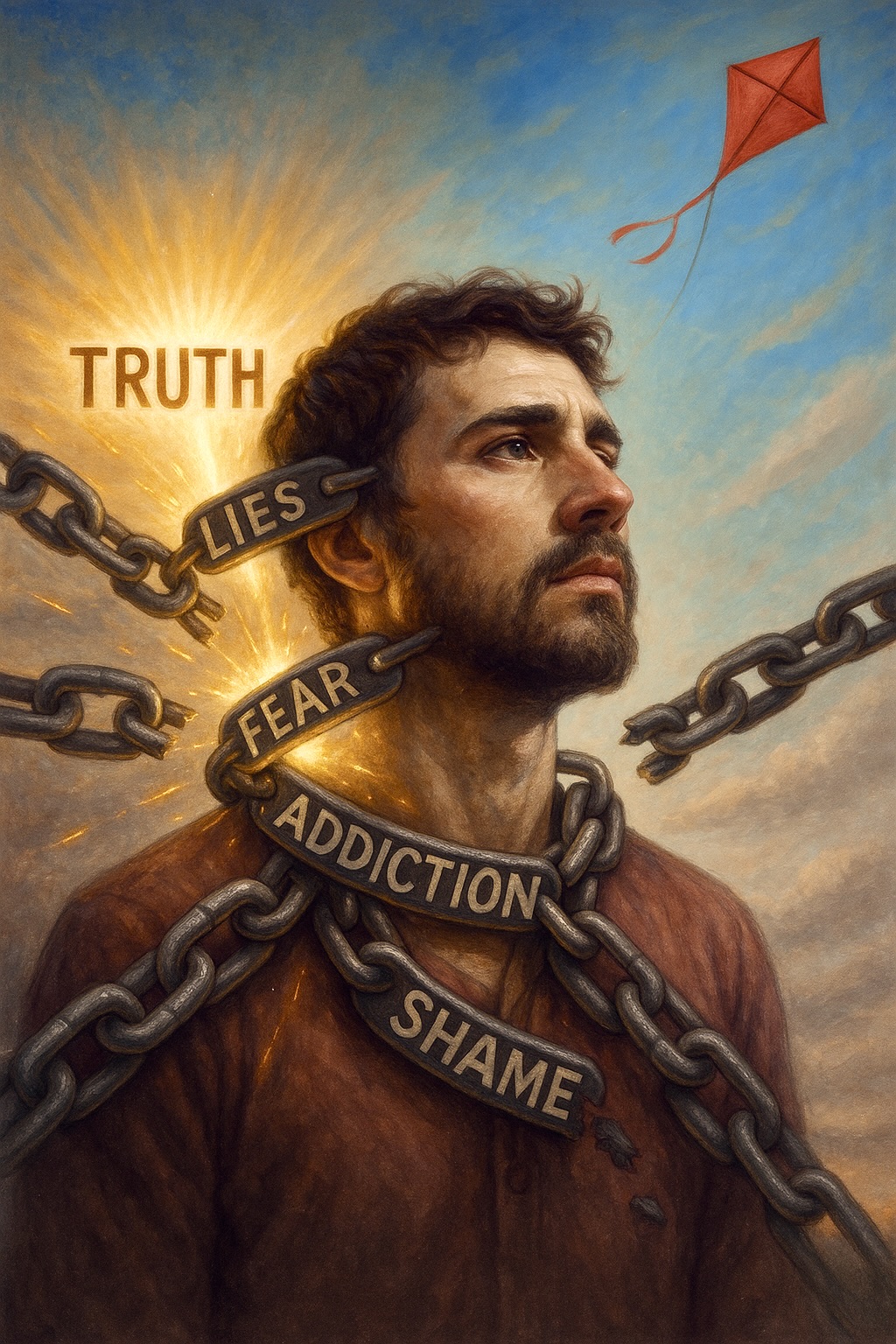
Since the beginning—since Eden—our freedom has always been won or lost in the realm of the mind. That’s where the battle takes place. Free will is the cornerstone of love because love grants the dignity of choice. And that freedom to choose—to accept or reject love—is sacred.
But it’s also vulnerable. Lies are the enemy’s most effective weapon. They don’t overpower us physically; they infect our thoughts. And over time, they enslave us.
Make no mistake: lies can be seductive. Just ask Eve. Or anyone who’s fallen prey to addiction, shame, or self-deception. I believed one such lie in my youth—the alluring promise of the “free love” movement. It claimed that romantic and sexual freedom, unbound by biblical covenant, would lead to a richer life. It didn’t.
The supposed freedom of the ’60s and ’70s came at a steep price: broken relationships, disease, depression, instability, and addiction. It wasn’t love. It was bondage. And it all started with a shift in thinking—a lie accepted as truth.
Most of the lies we face today don’t make headlines. They’re quieter, more personal, but just as destructive:
- The child who is constantly corrected begins to believe they’re inherently bad.
- The workaholic who measures worth by productivity and status.
- The perfectionist who can never rest.
- The wounded heart convinced it’s unlovable.
- The whispered thought: “You’re not enough.”
- The desperate hope that secretly ending a pregnancy will bring relief, only to be met with lasting soul pain.
Jesus said the truth sets us free, which means lies hold us captive, not in chains of iron, but in chains of falsehood. These lies distort reality, distance us from God, and leave us stumbling in the dark. But Jesus didn’t just bring truth—He is truth. He came to liberate us.
In Mark 1:15, Jesus says: “The time has come. The kingdom of God has come near. Repent and believe the good news!” These two imperatives—repent and believe—are deeply linked. Repentance isn’t just remorse or behavior change. It’s a Spirit-powered reorientation of the mind. It’s turning from deception and aligning ourselves with God’s revealed reality.
Repentance is freedom’s doorway.
It’s saying, “Yes” to truth. “Yes” to love. “Yes” to being adopted into a family where freedom, not fear, reigns. And because we’re still in a battle, repentance isn’t a one-time event. It’s a daily practice—a habit of the heart.
That’s why the apostle Paul wrote in Philippians 4:8:
“Whatever is true, whatever is noble, whatever is right, whatever is pure, whatever is lovely, whatever is admirable… think about such things.”
This thinking is how we stay free. We train our minds to dwell on what is true. We choose what we feed our thoughts. And we refuse to give lies the final word.
Because what holds our attention eventually shapes our identity.
Run the play. Win the battle for your mind.
“Repentance isn’t just remorse or behavior change. It’s a Spirit-powered reorientation of the mind. It’s turning from deception and aligning ourselves with God’s revealed reality.”
Finding Our Place in the Story
What lie have you unknowingly accepted as truth in your life?
How might daily repentance help you reframe your thoughts around God’s truth?
What practices can help you focus your mind on what is noble, pure, and lovely?


Leave a Reply