Running The Play Logo

Category: RTP

  • The Battle for Your Mind

    “Then you will know the truth, and the truth will set you free.”  John 8:32 NIV

    Arnold Palmer said, “Golf is a game of inches. The most important are the six inches between your ears.” He was talking about the battle for our thought life.


    Since the beginning—since Eden—our freedom has always been won or lost in the realm of the mind. That’s where the battle takes place. Free will is the cornerstone of love because love grants the dignity of choice. And that freedom to choose—to accept or reject love—is sacred.

    But it’s also vulnerable. Lies are the enemy’s most effective weapon. They don’t overpower us physically; they infect our thoughts. And over time, they enslave us.

    Make no mistake: lies can be seductive. Just ask Eve. Or anyone who’s fallen prey to addiction, shame, or self-deception. I believed one such lie in my youth—the alluring promise of the “free love” movement. It claimed that romantic and sexual freedom, unbound by biblical covenant, would lead to a richer life. It didn’t.

    The supposed freedom of the ’60s and ’70s came at a steep price: broken relationships, disease, depression, instability, and addiction. It wasn’t love. It was bondage. And it all started with a shift in thinking—a lie accepted as truth.

    Most of the lies we face today don’t make headlines. They’re quieter, more personal, but just as destructive:

    • The child who is constantly corrected begins to believe they’re inherently bad.
    • The workaholic who measures worth by productivity and status.
    • The perfectionist who can never rest.
    • The wounded heart convinced it’s unlovable.
    • The whispered thought: “You’re not enough.”
    • The desperate hope that secretly ending a pregnancy will bring relief, only to be met with lasting soul pain.

    Jesus said the truth sets us free, which means lies hold us captive, not in chains of iron, but in chains of falsehood. These lies distort reality, distance us from God, and leave us stumbling in the dark. But Jesus didn’t just bring truth—He is truth. He came to liberate us.

    In Mark 1:15, Jesus says: “The time has come. The kingdom of God has come near. Repent and believe the good news!” These two imperatives—repent and believe—are deeply linked. Repentance isn’t just remorse or behavior change. It’s a Spirit-powered reorientation of the mind. It’s turning from deception and aligning ourselves with God’s revealed reality.

    Repentance is freedom’s doorway.

    It’s saying, “Yes” to truth. “Yes” to love. “Yes” to being adopted into a family where freedom, not fear, reigns. And because we’re still in a battle, repentance isn’t a one-time event. It’s a daily practice—a habit of the heart.

    That’s why the apostle Paul wrote in Philippians 4:8:
    “Whatever is true, whatever is noble, whatever is right, whatever is pure, whatever is lovely, whatever is admirable… think about such things.”
    This thinking is how we stay free. We train our minds to dwell on what is true. We choose what we feed our thoughts. And we refuse to give lies the final word.

    Because what holds our attention eventually shapes our identity.

    Run the play. Win the battle for your mind.

    “Repentance isn’t just remorse or behavior change. It’s a Spirit-powered reorientation of the mind. It’s turning from deception and aligning ourselves with God’s revealed reality.”

    Finding Our Place in the Story

    What lie have you unknowingly accepted as truth in your life?

    How might daily repentance help you reframe your thoughts around God’s truth?

    What practices can help you focus your mind on what is noble, pure, and lovely?

  • Upside Down ƃuᴉʌᴉפ

    … just as the Son of Man did not come to be served, but to serve,   and to give his life as a ransom for many.”  Matthew 20:28 NIV

    We tend to think that if we had the right people in our corner—billionaires, influencers, CEOs—Kingdom impact would skyrocket. But Jesus never built that way.


    Take a quick inventory of the wealthiest people alive today. How many of them love Jesus and are all-in as his followers? It’s rare for God to partner with the ultra-wealthy. He doesn’t need them to accomplish his will.

    Jesus chose twelve mostly poor, uneducated disciples. He once said it’s easier for a camel to pass through the eye of a needle than for the rich to enter the Kingdom. If Jesus were here today, who would he pursue—twelve high-capacity donors, or twelve prayer warriors? What does your heart say?

    Meanwhile, much of the modern church has built a massive engine around fundraising. It’s estimated the American church spends $3–5 billion and over 90 million hours each year to keep money flowing. Even with that, churches spend far less on fundraising than secular nonprofits—and yet we’ve imported a deeply transactional mindset.

    If stewardship is truly discipleship, is our current fundraising culture drawing people into deeper faith, or just optimizing a revenue stream?

    I’ve grown uncomfortable with the word “donor.” In most ministry spaces, it frames the relationship in transactional terms. We ask people to give, and they ask what they’ll get: recognition, status, tax advantages, emotional satisfaction. Ministries respond with promises—naming rights, updates, or spiritual ROI.

    That is upside down.

    God’s right-side-up model is not transactional, but covenantal. It’s not ROI but ROL, which is a return on life. In every area of influence—home, work, church, community—Jesus modeled the right-side-up way: to serve and to give. He gave his life as a ransom. That’s the kind of currency that builds the Kingdom.

    So, let’s stop viewing people as donors, projects, or prospects. Let’s view every interaction as a divine opportunity to disciple, serve, and love without expecting anything in return. Let’s release our strategies and agendas and trust the One who owns it all.

    God doesn’t need the wealthy to accomplish great things. He wants to partner with humble people after his own heart.

    Run the play. RTP for ROL.

    “God’s right-side-up model is not transactional, but covenantal. It’s not ROI but ROL”

    Finding Our Place in the Story

    Alignment: In my own giving journey, have appeals felt more like invoices or invitations to partner with God’s work?

    Stewardship: If my church/ministry redirected just 1 % of its fundraising budget to frontline ministry, what kingdom stories might emerge?

    Participation: How could I move from being a “transactional donor” to a true co-laborer—offering time, talent, and prayer alongside treasure?

  • 5 + 2 Prayers


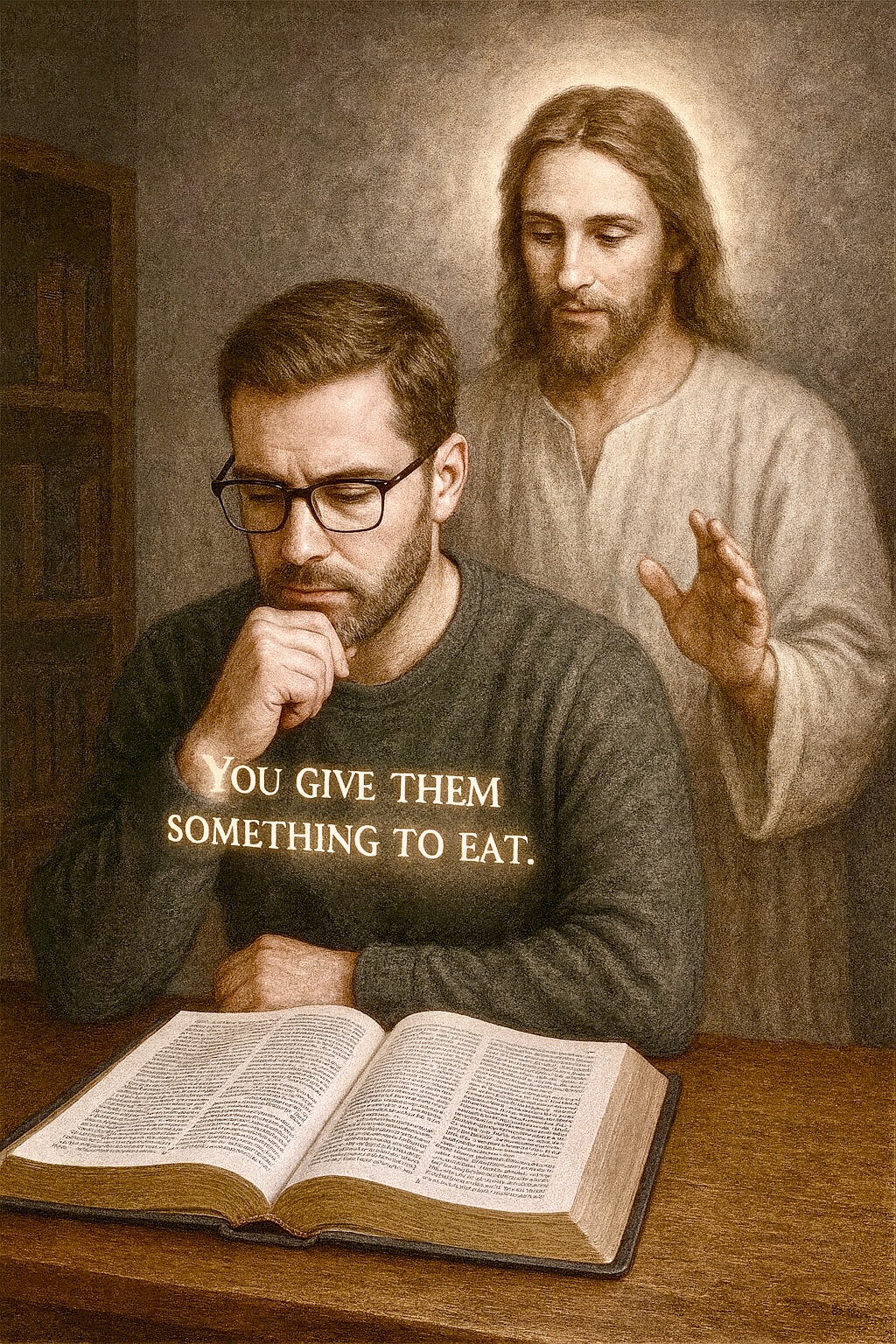
    “You give them something to eat.” – Luke 9:13 NIV

    Jesus wasn’t challenging their logistics but their vision.


    Prayer doesn’t come naturally to me. Apparently, it wasn’t easy for Jesus’ disciples either. Their request—”teach us how to pray”—comforts and encourages me. It reflects a truth I’ve found: as our faith matures, so do our prayers. This evolution mirrors our growing intimacy with God and deepening understanding of his ways.

    The disciples’ experience feeding the five thousand illustrates this beautifully. Returning from their first mission of healing the sick and proclaiming God’s Kingdom with Jesus’ authority, they learned another lesson. Faced with a hungry crowd, they suggested Jesus send everyone away. Instead, Jesus said, “You give them something to eat.” He wasn’t challenging their logistics but their vision. He invited them into a partnership, encouraging them to see beyond the natural and embrace Kingdom realities.

    Together, they fed the multitude with 5 loaves and 2 fish.

    A similar transformation awaits us in our prayers. When Jesus taught us to pray, “Thy Kingdom come, Thy will be done on earth as it is in heaven,” he wasn’t merely instructing us to ask. It’s a proclamation, spoken in agreement with God’s perfect will. There’s no uncertainty—it’s declaring heaven’s reality into our earthly circumstances. Our prayers shift from passive requests to active participation in God’s purposes.

    However, like most worthwhile endeavors, effective prayer follows a crawl-walk-run progression. Jesus assured His disciples, “Until now, you have not asked for anything in my name. Ask and you will receive, and your joy will be complete.” He wasn’t inviting us to remind him of earthly problems, but instead calling us to partner with him in bringing heavenly solutions. Prayer becomes powerful when aligned with his agenda.

    Growing in this authority isn’t about instructing God, but about stepping into what he’s already doing. Jesus clarified this, saying, “Apart from me you can do nothing.” Rather than stating the obvious, our prayers should bring heaven’s reality—freedom from disease, brokenness, pain, and sorrow—to our families, neighborhoods, and nations. We truly need and desire more of Jesus, reigning fully and powerfully among us.

    When we pray in his name, we agree with His Kingdom priorities. Jesus patiently waits for us to see what needs doing and to step forward boldly, empowered by his authority. He is waiting on us, not the other way around. Our role is active; our purpose is clear: proclaiming heaven on earth through prayer.

    So let’s pray boldly. Let’s pray intentionally. Let’s pray with Kingdom vision. Because, in the words of Jesus, the command remains, “You give them something to eat.”

    Run the play. (Run the pray.) He is still turning water into wine.

    “He is waiting on us, not the other way around. Our role is active; our purpose is clear: proclaiming heaven on earth through prayer.”

    Finding Our Place in the Story

    When have you been tempted to dismiss a situation because it seemed impossible? How can remembering Jesus’ words—”You give them something to eat”—change your response next time?

    How might your prayers shift if you approached them not as requests, but as active proclamations of God’s Kingdom reality?

    What specific area in your life or community needs the bold, authoritative prayer, “Thy Kingdom come”? How can you partner with God practically in this area?

  • Decide Before You Smell the Fries


    But Daniel resolved not to defile himself with the royal food and wine, and he asked the chief official for permission not to defile himself this way.
    — Daniel 1:8 NIV

    Resolve and Integrity — the inner decisions made before the battle begins


    Young nobles, including Daniel, are taken into exile and royal service when Babylon conquers Jerusalem. Despite pressure to conform, Daniel resolves not to defile himself with the king’s food, and God honors his faithfulness, granting him wisdom and favor. Daniel and his friends rise above the rest, standing out for their integrity and insight. Resolve is the inner decision Daniel makes in advance to stay faithful or take a stand, no matter what challenges may come. Integrity and resolve kept Daniel whole in a world trying to pull him apart—from the king’s table to the lion’s den.

    When I read about Daniel and his friend’s approach to food, I wondered if it had an application for me. For most of my life, I’ve had an unhealthy relationship with food. I’ve had to learn to “eat to live” instead of “living to eat.” I lost close to 40 pounds 18 years ago and have kept it off. One of the ways I applied Daniel’s approach is best understood in the example of McDonald’s French fries. (Can you smell them?) If I were going to eat out, I would decide what to order in advance. In my mind, it was resolved. Settled. When I failed to do so, I had no resistance to the smell of fries or the enticement of less healthy menu items. I had a plan for eating well, and I ran the play.

    Inner decisions made in advance helped me get what I wanted more than French fries: better health.

    Resolve has helped me build a life of increasing integrity. It can help us de-compartmentalize our lives and re-integrate them around the truth. We’ve been taught to divide our lives into sacred and secular, often listing priorities like this: 1. God, 2. Family, 3. Work, 4. Friends. But God didn’t design us to live in silos. He created us to be whole. All of life is wholly sacred, period.

    Reintegration requires resolve—those daily inner decisions to keep the main thing Jesus and his Kingdom. In RTP language, this is the scorecard—the choices we’ve already made that shape a God-honoring day.

    In the Kingdom of God, Jesus Christ is the clearest example of a life of resolve and integrity. We aim to be his wholly integrated apprentices. Every day is a new opportunity to learn from him, resolve to follow him, and step into the work he prepared for us long ago (Ephesians 2:10).

    Just like Daniel, Jesus resolved in advance to live with integrity, no matter the cost. And he invites us to do the same. In a fractured world, let’s choose wholeness.

    Run the play—with resolve, with integrity, with Jesus.

    “Inner decisions made in advance helped me get what I wanted more than French fries: better health.”

    Finding Our Place in the Story

    What decisions do I need to resolve in advance to stay faithful in the areas where I’m most tempted to compromise?

    Where have I compartmentalized my life, treating some parts as “spiritual” and others as “secular”? How can I reintegrate those areas around Jesus and his Kingdom?

    What “fries” in my life—desires, distractions, or habits—threaten to pull me off course, and how can I pre-decide to pursue what matters most?

  • Wire and Duct Tape Solutions


    Therefore, if anyone is in Christ, he is a new creation. The old has passed away; behold, the new has come. All this is from God, who through Christ reconciled us to himself and gave us the ministry of reconciliation.
    2 Cor 5:17-18

    We need better solutions to life’s problems.


    When we were growing up, things like home appliances and televisions lasted longer. A lot longer. I’m not sure if they were built better or if it was more out of necessity. If something broke, we tried to fix it. In our house, many things were held together by wire and duct tape. A substantial wire cable even kept our garage from falling over. If we couldn’t fix it, we might have called a repairman—but it was rare to replace something outright.

    Our dad was handy but didn’t always have the right tool for the job. That’s where wire and duct tape came in. It didn’t always look pretty, but it worked. Many a broken baseball bat was held together with a nail or duct tape. I still remember the sting to the hands from hitting balls with a refurbished bat. From his experience, we learned that having the right tools is key to achieving the best outcome, but those tools aren’t always available.

    Many aspects of our lives often require repair as well. Despite outward appearances and beautifully curated social media, life is hard. Even the rich, beautiful, and famous don’t have a free pass. They may be among the most broken and miserable people if addiction and suicide rates are any indication.

    We often lack the right solutions to address our problems as individuals and as a nation. Seeing people put their hope in political candidates is heartbreaking. About half the country is devastated every four years because “all hope is lost.” The other half rejoices, at least temporarily, because their political messiah has won. But no matter who resides in the Oval Office, this remains true: there are no political solutions to spiritual problems, and all problems are spiritual. We continue to attempt to patch spiritual wounds with political or other temporal solutions.

    Every personal and corporate problem is rooted in what the Bible calls the Fall of Man, as described in Genesis 3. No exceptions. Therefore, the only real solution to what ails us is the gospel—the good news of our redemption through Christ’s sacrifice on the cross. When Jesus died and rose again, he reversed the curse. Theologians refer to this as the beginning of the New Creation. God, in Jesus Christ, is making all things new.

    The world offers temporary solutions, like wire and duct tape. The gospel is the only true and final answer to our need. One day soon, the entire cosmos will experience rebirth. The good news is that it’s already begun.

    Apprentice yourself to Jesus so your good works contribute to New Creation—and you experience the freedom, joy, and abundance he wants you to have.

    Run the play. Freedom and joy await.

    “… there are no political solutions to spiritual problems, and all problems are spiritual.”

    Finding Our Place in the Story

    Where am I using “wire and duct tape” instead of turning to Christ?

    How am I tempted to look to politics or performance for salvation?

    What would living today as part of God’s new creation look like?

    Thoughts on New Creation from N.T. Wright

  • Winning at Losing

     But seek first the kingdom of God and his righteousness, and all these things will be added to you. – Matthew 6:33 ESV

    Thoughts from losing on the pickleball court.


    Sometimes the best life lessons come in unexpected places. Our new neighborhood has a pickleball court, and some friendly pickleballers invited me to join their ranks, even though I had never played before. Today’s missive includes some observations from playing pickleball. More precisely, losing at pickleball.

    Growing up, I was the youngest of four boys. Much has been written about the ramifications of birth order. The things I’ve read have generally disparaged those of us who are the last-born. We have been described as master manipulators, charming, and adept at getting what we want. We are accused of “working the system” with a well-timed smile or a strategically deployed cute remark. To that I say, “No comment.” One indisputable fact is that I became very proficient at losing while playing with three older brothers.

    I lost at everything. Football, baseball, basketball, cards, checkers, chess, board games—you name it, they beat me. So losing at pickleball is in my wheelhouse. Those early losses trained me not just in humility, but in redefining what counts.

    How does someone who has experienced so much failure survive in our ‘winner take all’ culture? You simply find better ways to keep score and redefine what winning is. This is not a comment supporting the proliferation of participation trophies. I’m all for keeping score. I love that we keep track of things; I greatly enjoy winning a pickleball game. But I also find a lot of satisfaction even when I lose—because I don’t let the final score define me or the experience.

    By default, the world will tell you who you are and what to value. “Winning isn’t everything; it’s the only thing” is a well-known quotation in sports. It is attributed to UCLA Bruins football coach Red Sanders, and later to Vince Lombardi. It’s a lie of the scarcity mindset of the culture. This lie has become so woven into our cultural fabric that the team that places second out of the 32 teams in the NFL is labeled a loser each year. Their shame is the stuff of legends. Ask any Buffalo Bills fan. Getting to the Super Bowl is no small achievement, but in our culture, you aren’t a winner until they say you are. To that I say, “Baloney.”

    Don’t let someone else tell you who you are, your worth, or your life purpose. Unless that someone else is Jesus, who I believe provides a unique and profound understanding of our identity and worth. In his Sermon on the Mount, he emphatically taught his listeners not to worry about or run after the things of this world, because our Father in heaven knows we need them and longs to see us flourish. He is a good Dad, and his Kingdom is one of abundance. The key metric on Jesus’ scorecard was to seek God’s kingdom and righteousness first. I put Matthew 6:33 at the top of mine, too. It’s not possible to win at life without it.

    Kingdom First Abundance

    • Deriving great pleasure from hitting a good shot or doing great work.

    • Developing relationships with neighbors or colleagues.

    • Playing outside, soaking up vitamin D, or walking with a spouse, child, or friend.

    • Being considerate and keeping things moving. Lighten up, find the joy.

    • Staying upright—no one gets hurt. Protecting one another physically and emotionally.

    • Great sportsmanship, meeting at the net, congratulating the winners, and celebrating the game or someone else’s accomplishment.

    If Vince Lombardi were alive today and playing pickleball, he might say, “Going home unhurt and in one piece isn’t everything, it’s the only thing.”

    Create your abundant life scorecard. Ensure it begins with seeking first the Kingdom and his righteousness.

    Run the play.

    “… our Father in heaven knows we need them and longs to see us flourish. He is a good Dad, and his Kingdom is one of abundance.”

    Finding Our Place in the Story

    What experiences have reshaped your definition of “winning” or success?

    Can you recall a moment when losing led you to gain something more valuable?

    How does recognizing your worth beyond worldly standards influence your daily interactions? Has it helped you see God more clearly through their poverty or faith?

    Time for a laugh? Pickleball Fails Video

  • The Red Kite

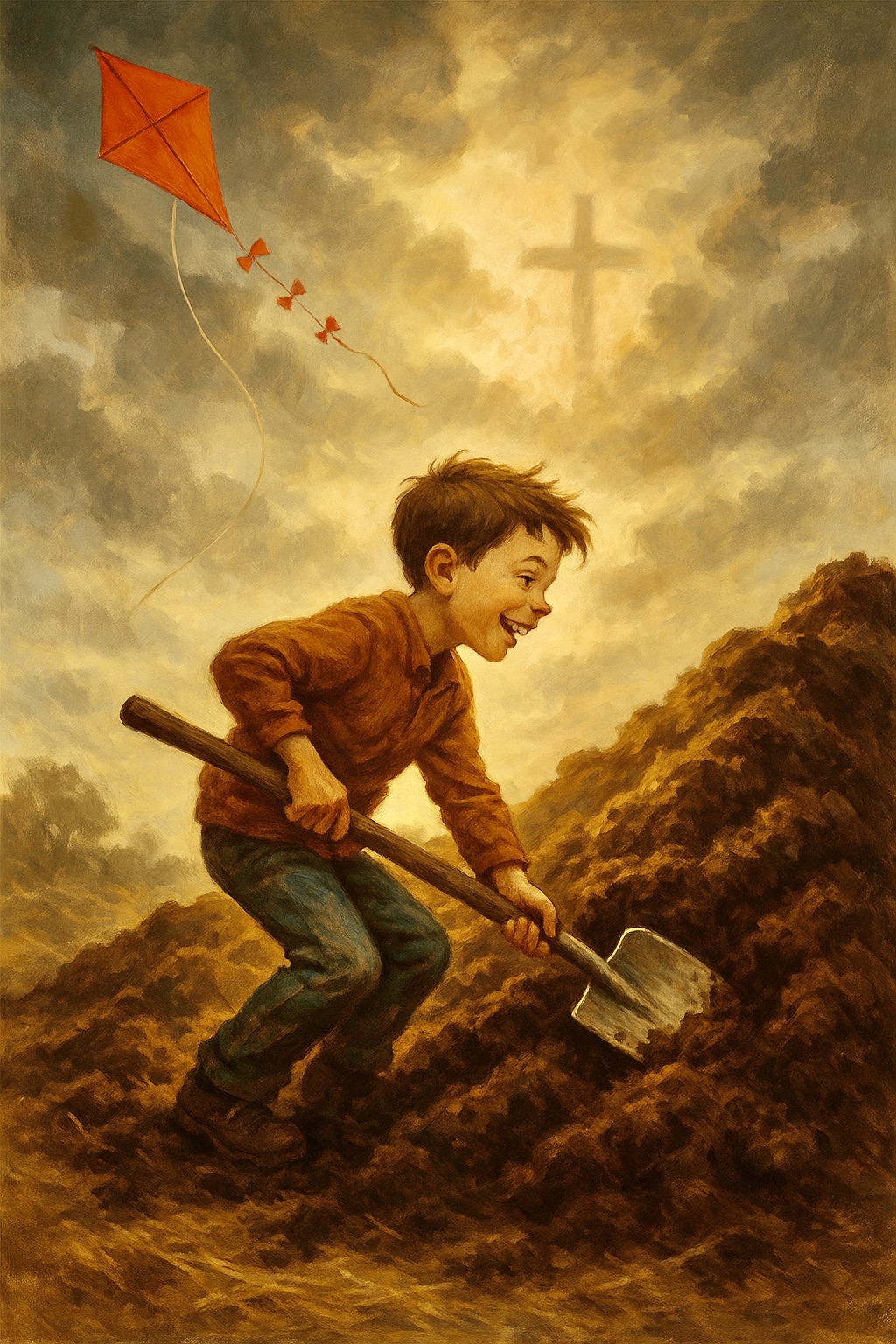
    I’ve grown to love the red kite that adorns much of what I publish. God graciously gave it to me to symbolize our partnership while writing and publishing our book. The kite captures how he calls us to follow him and then elevates us and everything we find to do as his apprentices.

    “He lifts the poor from the dust and the needy from the garbage dump. He sets them among princes, placing them in seats of honor. For all the earth is the Lord’s, and he has set the world in order. — 1 Samuel 2:8 NLT

    The red kite image was poetic and prophetic, tied to a much larger story.


    The arc of the entire Biblical story reveals how God is in the “elevation business.” Jesus self-identifies with the last, the least, the lowest, and the lost (Matthew 25:40). His passion is to take the things the world dismisses and elevate them with his love. He desires to see the broken, poor, and needy adopted as sons and daughters of the King of kings; a chosen people, a royal priesthood, a holy nation, God’s special possession (1 Peter 2:9). Then, like a kite in the wind, his Spirit carries us ever onward and upward. He imbues our lives with hope, meaning, and purpose, and seeks to partner with us as we run the play daily.

    For us, living in a place with so much material abundance, it can be challenging to self-identify as poor and needy. It was hard for the Pharisees in Jesus’ time to see their spiritual poverty as well—after all, they were Abraham’s children. Sometimes the wind carries us into difficult seasons or places so that God can perform spiritual “cataract surgery,” helping us to see our poverty. He longs to turn our upside-down lives right-side up. Who can soar flying upside down?

    Another way God reveals our spiritual poverty is by leading us to places and nations where material poverty is prevalent. It’s often in those places that we encounter brothers and sisters in Christ who are spiritually rich. They have much to teach us about faith, prayer, and joy in the Lord amid their struggles. It’s as though God distributed his gifts in this way so that we would discover our need for him and one another, inviting us into a covenant relationship. He has set the world in order.

    If this is resonating with you, take the next step of faith. Ask the Father to show you your poverty and how to apprentice yourself to Jesus.


    Run the play.


    It’s as though God distributed his gifts in this way so that we would discover our need for him and one another,

    Finding Our Place in the Story

    • What in your life has God “elevated”—not in worldly status, but in spiritual significance?


    • How can recognizing your spiritual poverty become the beginning of transformation?


    • Who in your life or travels has helped you see God more clearly through their poverty or faith?

    P.S. I would like to invite you to join us for a special evening of prayer tomorrow night (May 29th) for the nation of Haiti. Can there be any doubt that Haiti is where Jesus calls those who have been given material abundance to covenant with those who can help us see our poverty? 

    As an act of love, we will intercede for them.
Let the red kite remind us—He is still lifting the poor from the dust and setting the world in order. Let’s rise together in prayer.

Please join in Spirit, in person, or both.


  • Trade Secrets

    “Come to me, all you who are weary and burdened, and I will give you rest. Take my yoke upon you and learn from me, for I am gentle and humble in heart, and you will find rest for your souls. For my yoke is easy and my burden is light.” Matthew 11:28-30

    Life is full of trade-offs, and knowing what not to trade may be the real secret.


    My first trading experience was baseball cards in the ’50s and ’60s. A nickel would get you a handful of cards depicting baseball players and that signature stick of Bazooka bubble gum—a pink slab of heaven. The aroma of this gum is an instant nostalgic trigger. ‘Heaven’ lasted only a few seconds as the gum quickly lost flavor, but we still had the baseball cards. When we didn’t get the players we wanted, we could trade cards with others to get ‘our guys.’ These cards are still being traded; some can fetch millions of dollars!

    In modern times, we trade stocks and bonds, real estate, art and other collectibles, currencies, cryptocurrencies, derivatives, draft picks, and sports players. Some say that working is simply trading hours for dollars. But that view misses the deeper spiritual and relational trades we make daily.

    In a Biblical sense, a trade is a spiritual exchange where something temporal is given up in trust for something eternal, often revealing the heart’s true allegiance—whether in temptation, obedience, or covenant. Trading is in our DNA, with the first trade occurring in the Garden of Eden. That trade—the ultimate bad deal—traded truth for a lie.

    I recently saw a YouTube video of Pastors Greg Laurie and Chuck Smith covering various topics. The occasion celebrated Chuck’s many faithful years as the founding Pastor of the Calvary Church movement. What caught my attention was Chuck’s comment about a trade. When confronted by personal tragedies, they shared how hard it was to wrestle with all the ‘Why’ questions. In those times, they said, the secret is not to trade what we know for what we don’t know.

    There are many ‘why’ questions that will go unanswered on this side of eternity, but we know God is good, he loves us, and he will restore all that has been lost. The trade secret is to set our hearts and minds on what we know to be true, and to let go of the things we can’t know.

    King David teaches a spiritual trading master class in the Psalms. ‘My God, my God, why have you forsaken me?’ is from Psalm 22 and was a lament of Jesus as he hung on the cross. David doesn’t let the unanswerable have the last word. In his Psalms, we read transition phrases like ‘But God,’ ‘Yet God,’ ‘My God,’ followed by a truth about God’s nature and care for us. ‘The Lord is my rock, my fortress, and my savior; my God is my rock, in whom I find protection. He is my shield, the power that saves me, and my place of safety.’ (Psalm 18:2) David trades what he doesn’t like about his circumstances for what he does know about God. A good trade!

    Life is hard. At the beginning of each new day, with open arms, Jesus says, ‘Follow me.’ He invites us to trade our brokenness, sin, and shame for his righteousness, grace, and abundant life. The mother of all good trades.

    Don’t give up what you know about God for what you don’t know about your circumstances.

    “There are many ‘why’ questions that will go unanswered on this side of eternity, but we know God is good, he loves us, and he will restore all that has been lost.”

    Run the play. Make good trades.

    Watch a short interview clip with Chuck Smith and Greg Laurie: Clip

    Finding Our Place in the Story

    • What trades am I making each day—emotionally, spiritually, relationally?

    • Where am I tempted to trade truth for comfort, or trust for control?

    • What is one “good trade” I can make today to realign with what I know is true?

  • Five Words A Day

    It is not by force nor by strength, but by my Spirit, says the Lord … Do not despise these small beginnings, for the Lord rejoices to see the work begin …   Zechariah 4:6 & 10


    I never dreamed I’d write a book. Yet by God’s grace and five words a day, it happened. The reality still feels surreal. When people ask how long it took me to write it, I often say, “Thirty years,” which usually gets a chuckle. But the more accurate answer is that it took just over a year to write and publish Following the Invisible Jesus. Both are true. 

    Everything about the process was new and unknown. I needed a rhythm, not a deadline. That’s when I remembered something Bob Goff said on his Writing Room Podcast: “Write five good words a day.” He encouraged aspiring writers to just keep writing, to let their bad words be “catnip for the good ones.”That phrase stuck with me. I promised myself to write at least five words a day. Most days, I wrote much more. But the promise was freeing rather than burdensome. I felt empowered, not shackled.

    Zechariah 4 is God’s reminder that big, holy things often start small. The Israelites were rebuilding the temple, and their efforts seemed trivial. But God says the work will succeed—not by human strength, but by his Spirit. And he rejoices to see it begin.

    It turns out, the Spirit delights in small starts. He turns water into wine. He turns five daily words into a book that honors him. He brings meaning to our work and lets joy spill out in the process. Embracing “five words a day” became the secret sauce behind my book. But it also became a metaphor I now use in coaching others who have a dream that feels out of reach.

    Do you have a dream? Or maybe there’s a part of your life where you feel stuck? In coaching, we often ask: What’s the next step? For me, for one whole year, the next step was five words a day. The book is done, but I’m still writing—because the Spirit is still speaking, and the joy keeps flowing.

    Do not despise these small beginnings, for the LORD rejoices to see the work begin. A good coach can help you name your next small step—toward the life God had in mind when he created you.

    Run the play. Take the next step. Joy awaits.

    “He turns water into wine. He turns five daily words into a book that honors him. He brings meaning to our work and lets joy spill out in the process.”

    Finding Our Place in the Story

    1. What “small beginning” might the Spirit be inviting you to embrace today?
    2. What dream feels out of reach—and what’s one “five word” step you could take toward it?
    3. How have you seen God turn something ordinary (like words) into something extraordinary?
  • It’s Not About You

    “Unless a kernel of wheat falls to the ground and dies, it remains only a single seed. But if it dies, it produces many seeds.” (John 12:24 NIV)


    A few years ago, when my mom was under hospice care at home, my three brothers and I were taking turns helping with her care. A few days before it was my turn to make the trip to Buffalo, where she lived, her health deteriorated, and caring for mom now required helping with bathing and toileting. The level of my anxiety was growing exponentially. I could not imagine doing these things for and with her. My fear and anxiety were palpable. Then, one day, I heard Jesus say, “Michael, this is not about you.” Immediately, a shift occurred in my soul. I had peace. My circumstances didn’t change; my perspective and resolve did.


    I was able to face those fears because there was a greater purpose. In Nietzsche’s words, “He who has a why to live for can bear with almost any how.” By God’s grace and mercy, Mom died before we could get there, sparing her from more humiliation and pain. It was a gift to us both.

    So what was the redemptive purpose? I’m not sure we can know fully on this side of eternity, but I do know in part. Sharing this story and this truth will help someone who reads it. It also helped me. That may fit my definition of a BOGO—Buy One, Get One: a story that helps both the listener and the teller. (A story for another day?)

    What is causing the most stress in your life right now? You might be surprised to learn: It’s not about you. We make it all about us because our spiritual vision is impaired, but God wants to partner with us in a redemptive work for someone else. That stress agent contains the necessary ingredients to help someone else, and this knowledge creates a shift in our hearts.

    Viktor Frankl, a Holocaust survivor and renowned psychiatrist, taught that life holds meaning even in the darkest suffering, if we have the courage to seek it. He wrote, “In some way, suffering ceases to be suffering at the moment it finds a meaning, such as the meaning of a sacrifice.” Jesus expressed this powerful truth when he compared suffering to a seed that, in dying, produces many seeds. Seeds that will produce abundant fruit in and for others.

    Tattoos aren’t my thing, but if I were ever going to get one, this is what I would tattoo on the back of my right hand: “It’s not about me.” On my forehead, I would tat: “It’s not about you.” Here’s the point: As a disciple of Jesus, I need constant reminders that my entire focus must be on following and trusting him, not my circumstances. So do you. If there is a mark of the beast, I bet it reads: “It’s all about me.” That’s the defining lie of the kingdom of darkness.

    Jesus turns the world right-side up: ‘Whoever wants to be my disciple must deny themselves…’ Scientists once thought the sun revolved around the Earth. We now know the Earth revolves around the sun. In Luke 9:23 and John 12:24, Jesus says something similar—our lives revolve around Him, the Son of God. It’s all about Him.

    Run the play – It’s all about him.

    “That stress agent contains the necessary ingredients to help someone else, and this knowledge creates a shift in our hearts.”

    Finding Our Place in the Story

    1. What current struggle or source of stress might contain a redemptive purpose beyond yourself?
    2. When have you experienced peace not from changed circumstances, but from a shift in perspective?
    3. What would change if you genuinely believed, every day, that your life revolves around the Son, not yourself?